

Introduction
Moving and repositioning patients is a routine part of care work, but it is also one of the highest-risk activities for workplace injury. In environments such as aged care, disability support, hospitals, and home care, improper manual handling can result in serious musculoskeletal injuries for workers and discomfort or harm for clients.
One of the most effective tools for reducing this risk is the slide sheet.
This article explains how to safely use slide sheets for patient moving, why they are essential in modern care environments, and how proper training supports safer outcomes. For workers in Western Australia, completing manual handling and First Aid Courses in Perth can build the skills needed to perform these tasks safely and confidently.
What Is a Slide Sheet?
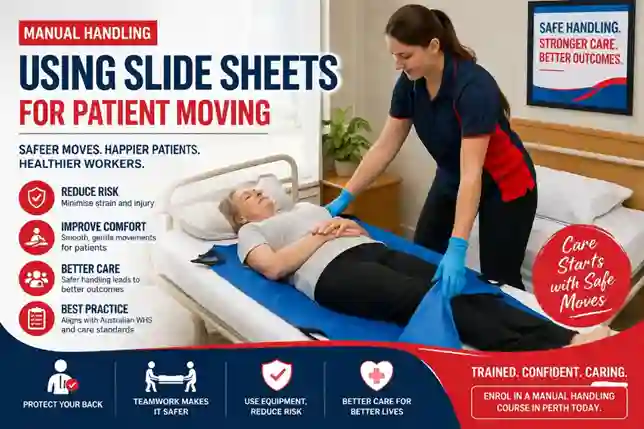
A slide sheet is a low-friction fabric device designed to help move or reposition a person with minimal physical effort.
It works by:
- Reducing friction between the patient and the surface
- Allowing smooth movement across beds or trolleys
- Minimizing the need for lifting
Slide sheets are commonly used for:
- Repositioning patients in bed
- Turning patients onto their side
- Moving patients up or down the bed
- Lateral transfers (bed to trolley)
Why Slide Sheets Are Important
Without assistive equipment, workers often rely on forceful pulling or lifting, which increases the risk of:
- Back injuries
- Shoulder strain
- Repetitive stress injuries
- Client discomfort or skin damage
Using slide sheets:
- Reduces physical strain
- Improves control during movement
- Maintains patient dignity
- Supports compliance with WHS guidelines
In many care settings, slide sheets are considered best practice, not optional.
When Should You Use a Slide Sheet?
Slide sheets should be used whenever:
- A patient cannot move independently
- There is a need to reposition in bed
- Friction makes movement difficult
- Worker safety is at risk
Never rely on strength alone when equipment is available.
Step-by-Step: How to Use a Slide Sheet Safely
1. Prepare the Environment
- Ensure the area is clear of obstacles
- Adjust bed height to waist level
- Apply brakes to beds or equipment
- Explain the procedure to the patient
2. Assess the Situation
- Check the patient’s mobility level
- Determine how many staff are required
- Identify any risks (pain, injury, behavior)
3. Position the Slide Sheet
Option A: Rolling Method
- Gently roll the patient onto their side
- Place the folded slide sheet behind them
- Roll the patient back onto the sheet
- Pull the remaining sheet through
4. Use Proper Technique
- Keep a neutral spine
- Bend at the knees, not the back
- Use body weight, not arms, to move
- Keep movements smooth and controlled
5. Perform the Move
- Coordinate with your team
- Count down (“Ready, steady, move”)
- Gently slide the patient into position
Avoid jerking or sudden movements.
6. Remove or Reposition the Sheet
- Remove the slide sheet if no longer required
- Ensure patient comfort and alignment
- Check for pressure areas or discomfort
Common Mistakes to Avoid
Even with slide sheets, injuries can occur if used incorrectly.
Avoid:
- Using too few staff for the task
- Twisting while moving the patient
- Rushing the process
- Not communicating with your team
- Leaving slide sheets under patients unnecessarily (risk of skin issues)
Infection Control and Maintenance
Slide sheets must be:
- Cleaned according to facility protocols
- Checked for damage or wear
- Stored correctly
- Not used if compromised
Infection control is critical in all healthcare and community settings.
Legal Responsibilities in Australia
Under Work Health and Safety (WHS) laws, employers must:
- Provide appropriate manual handling equipment
- Ensure staff are trained
- Maintain equipment
- Implement safe systems of work
Workers must:
- Follow training
- Use equipment provided
- Report hazards
Failing to use available equipment like slide sheets may increase risk and breach safety procedures.
Training in Manual Handling
The nationally recognized course HLTWHS005 – Conduct Manual Tasks Safely teaches:
- Risk assessment
- Safe movement techniques
- Use of assistive equipment (including slide sheets)
- Injury prevention strategies
For carers and support workers in WA, combining manual handling training with First Aid Courses in Perth provides a strong foundation for safe practice.
Creating Safer Care Environments
Organizations can improve safety by:
- Ensuring slide sheets are readily available
- Providing regular refresher training
- Encouraging teamwork during transfers
- Monitoring manual handling practices
A proactive approach reduces injuries and improves care quality.
Conclusion
Slide sheets are a simple but powerful tool in manual handling. When used correctly, they reduce strain, improve safety, and support better outcomes for both workers and patients.
Safe patient moving is not about strength — it’s about technique, equipment, and teamwork.
Investing in proper training ensures workers have the confidence and skills to perform manual handling tasks safely every day.

