

Introduction
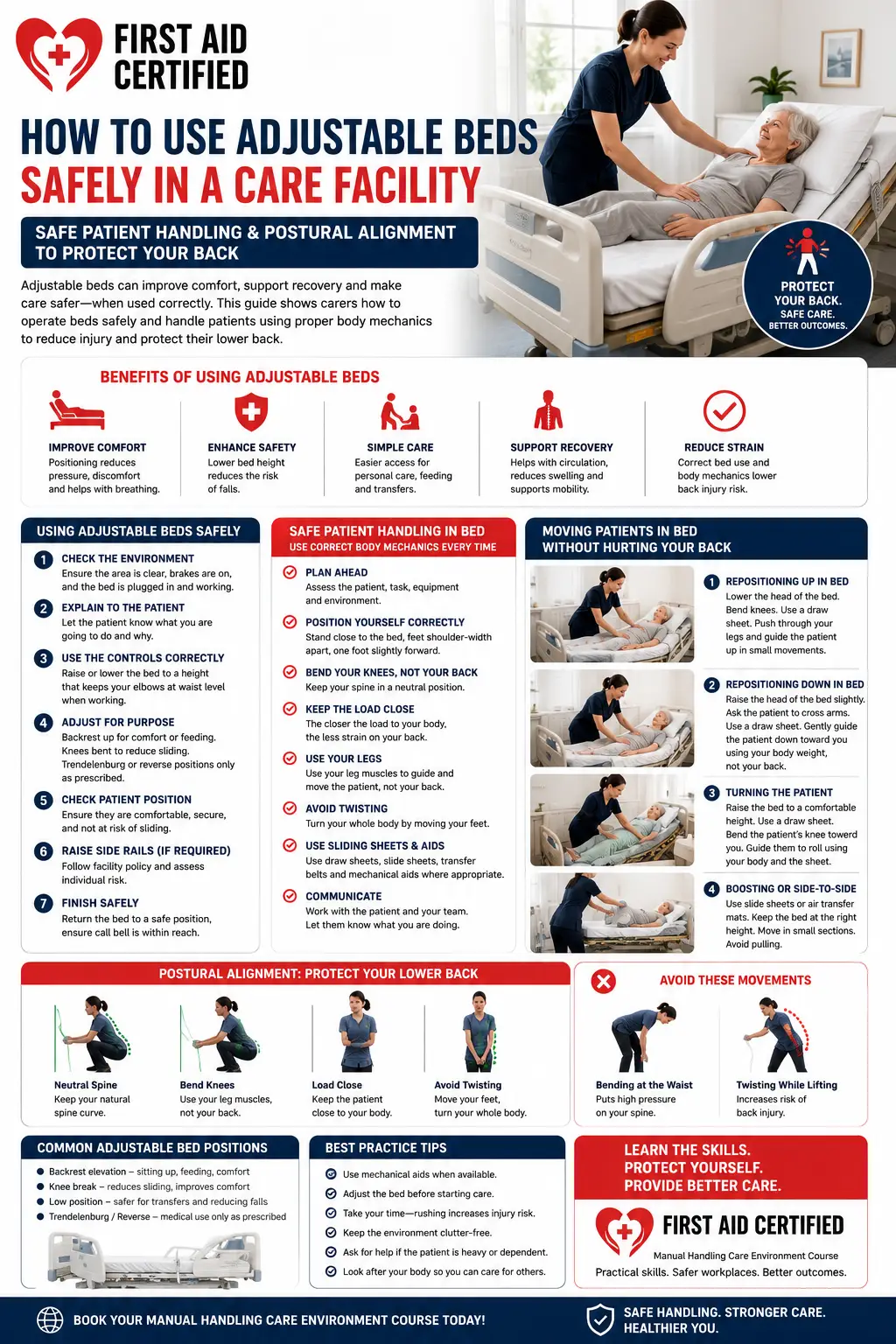
Adjustable beds are an essential part of modern healthcare, aged care, disability support, hospitals, and community care environments. They improve comfort, assist mobility, support clinical care, and help reduce the physical strain associated with patient handling.
However, adjustable beds only improve safety when they are used correctly.
Incorrect bed height, poor posture, unsafe patient handling, awkward reaching, and improper positioning techniques can place enormous strain on a worker’s lower back, shoulders, neck, and knees. Over time, these unsafe practices may contribute to serious musculoskeletal injuries.
For support workers, nurses, carers, disability support staff, and healthcare professionals, understanding how to use adjustable beds safely is a critical part of manual handling.
This guide explains:
- How adjustable beds improve safety
- Correct bed positioning techniques
- Safe patient repositioning methods
- Lower back protection strategies
- Correct posture and body alignment
- Common manual handling mistakes
- Why HLTWHS005 – Conduct Manual Tasks Safely training matters
For workers in Perth care environments, completing HLTWHS005 – Conduct Manual Tasks Safely and First Aid Courses Perth helps build safer workplace practices and improves confidence during patient handling tasks.
Why Adjustable Bed Safety Matters
Patient handling is one of the leading causes of workplace injury in healthcare and aged care settings.
Workers regularly perform tasks such as:
- Repositioning patients
- Assisting with transfers
- Rolling patients
- Supporting personal care
- Changing bedding
- Assisting mobility
Without correct techniques, these tasks may lead to:
- Lower back injuries
- Shoulder strain
- Neck pain
- Repetitive strain injuries
- Fatigue
- Client discomfort or injury
Adjustable beds are designed to reduce these risks by helping workers maintain safer posture and body positioning.
What Is an Adjustable Bed?
An adjustable bed is a bed that can change height and position electronically or mechanically.
Features may include:
- Adjustable height
- Raising the head section
- Raising leg sections
- Tilt positioning
- Side rails
- Pressure care functions
These beds are commonly used in:
- Aged care facilities
- Hospitals
- Disability support services
- Rehabilitation centres
- Home care settings
How Adjustable Beds Support Manual Handling Safety
Adjustable beds help reduce manual handling risks by:
- Reducing bending and reaching
- Improving posture
- Assisting safer patient positioning
- Minimising awkward movements
- Supporting worker body alignment
- Reducing force required during repositioning
However, workers must still use correct manual handling techniques.
The bed alone does not eliminate injury risk.
Understanding Hazardous Manual Tasks
Patient handling is considered a hazardous manual task under WHS guidelines.
Hazards may include:
- Repetitive movements
- Sustained bending
- Twisting
- Forceful exertion
- Awkward postures
- Unexpected patient movement
Training in HLTWHS005 – Conduct Manual Tasks Safely teaches workers how to identify and reduce these risks.
Preparing the Environment Before Patient Handling
Before assisting a patient, workers should prepare the environment.
Safety Checklist
- Clear obstacles from around the bed
- Ensure brakes are applied
- Adjust lighting if needed
- Position equipment within reach
- Check for spills or trip hazards
- Ensure enough staff are available if required
Unsafe environments increase injury risk significantly.
Correct Adjustable Bed Height
One of the biggest manual handling mistakes is working with the bed too low.
General Rule
The bed should usually be adjusted to approximately waist or hip height when performing care tasks.
This helps reduce:
- Bending
- Stooping
- Lower back strain
- Shoulder overreaching
Different tasks may require slightly different bed heights.
Why Bed Height Matters for Lower Back Protection
Lower back injuries are extremely common in care work.
When a worker bends repeatedly over a low bed:
- Spinal pressure increases
- Muscles fatigue faster
- Disc strain increases
- Postural alignment worsens
Using the adjustable bed correctly helps workers maintain a more neutral spine.
This significantly reduces lower back stress.
Correct Postural Alignment During Patient Handling
Posture is one of the most important parts of safe manual handling.
Good Postural Alignment Includes
- Neutral spine
- Shoulders relaxed
- Knees slightly bent
- Feet shoulder-width apart
- Core engaged
- Avoiding twisting movements
Workers should move their feet instead of twisting the back.
Common Poor Posture Mistakes
Reaching Across the Bed
This places excessive strain on the back and shoulders.
Twisting While Pulling
Twisting while moving a patient increases injury risk.
Working With Locked Knees
This reduces stability and increases back loading.
Leaning Forward Repeatedly
Sustained bending contributes to fatigue and spinal stress.
Safe Patient Repositioning Techniques
Patients often need repositioning to:
- Improve comfort
- Reduce pressure injuries
- Assist breathing
- Support clinical care
- Maintain alignment
Safe repositioning requires planning and technique.
Before Repositioning a Patient
Always assess:
- Patient mobility level
- Pain or injury
- Weight-bearing ability
- Cognitive status
- Need for additional staff
- Equipment required
Risk assessment is essential.
Using Slide Sheets with Adjustable Beds
Slide sheets reduce friction during repositioning.
Benefits include:
- Reduced force required
- Safer movements
- Less lower back strain
- Improved patient comfort
Safe Slide Sheet Principles
- Raise the bed to safe working height
- Maintain neutral spine
- Use smooth movements
- Coordinate with team members
- Avoid jerking or pulling suddenly
Slide sheets should be used according to workplace procedures.
Turning a Patient Safely
Turning patients is common during:
- Personal care
- Pressure area care
- Bedding changes
- Clinical treatment
Safe Turning Principles
- Explain the process
- Adjust bed height first
- Position feet correctly
- Use body weight instead of arms
- Keep movements controlled
Avoid pulling with the lower back.
Moving a Patient Up the Bed
This task commonly causes injury when performed incorrectly.
Safe Techniques Include
- Raising the bed
- Lowering the head section if appropriate
- Using slide sheets
- Working as a team
- Using coordinated movements
Never rely on strength alone.
Side Rails and Bed Safety
Side rails may assist safety in some situations.
However, they must be used according to:
- Care plans
- Facility procedures
- Risk assessments
- Clinical requirements
Incorrect use may create additional hazards.
Safe Transfers From Adjustable Beds
Patients may transfer from bed to:
- Wheelchairs
- Commodes
- Chairs
- Walking aids
Safe Transfer Principles
- Lower bed to safe transfer height
- Ensure brakes are applied
- Position equipment correctly
- Use assistive devices if needed
- Encourage patient participation
Transfers are high-risk manual handling tasks.
Managing Heavy or Bariatric Patients
Bariatric patient handling requires additional planning.
Workers may require:
- Additional staff
- Specialised equipment
- Bariatric beds
- Mechanical lifting devices
Attempting unsafe manual handling increases injury risk significantly.
Mechanical Aids and Adjustable Beds
Adjustable beds often work alongside:
- Hoists
- Slide sheets
- Transfer belts
- Pressure care devices
- Mobility aids
Workers should receive training in all equipment used.
Fatigue and Manual Handling
Fatigue affects posture, concentration, and coordination.
Tired workers are more likely to:
- Bend incorrectly
- Rush movements
- Forget safety steps
- Sustain injury
Regular breaks and safe staffing levels are important.
Communication During Patient Handling
Good communication improves safety.
Workers should:
- Explain each step
- Gain consent where possible
- Use countdowns during team movements
- Encourage patient participation
- Monitor discomfort
Communication reduces confusion and sudden movements.
Dignity and Person-Centred Care
Patient handling should always respect dignity.
Workers should:
- Maintain privacy
- Use respectful communication
- Involve the patient in decisions
- Move at a comfortable pace
Safe care includes emotional wellbeing.
Common Adjustable Bed Hazards
Incorrect Bed Height
This is one of the most common causes of poor posture.
Locked Wheels Not Applied
Beds may move unexpectedly.
Clutter Around the Bed
This increases trip hazards.
Poor Equipment Maintenance
Damaged beds or controls may create safety risks.
Rushing Patient Handling
Fast movements often increase injury risk.
Infection Control Considerations
Adjustable beds should be cleaned according to infection control procedures.
Workers should:
- Clean touch surfaces
- Follow PPE requirements
- Wash hands before and after care
- Prevent cross-contamination
This is especially important in aged care and hospital environments.
Adjustable Beds in Home Care Settings
Home care presents unique challenges.
Workers may encounter:
- Limited space
- Cluttered rooms
- Uneven flooring
- Poor lighting
- Family interference
Environmental assessments are essential before performing patient handling tasks.
Preventing Pressure Injuries
Adjustable beds help reduce pressure injury risk by allowing repositioning.
Workers should:
- Follow repositioning schedules
- Monitor skin condition
- Use pressure-relieving equipment
- Encourage movement where possible
Pressure care is an important part of patient safety.
Legal Responsibilities Under WHS
Under Australian Work Health and Safety laws:
Employers must:
- Provide safe equipment
- Deliver manual handling training
- Maintain equipment
- Assess risks
- Implement safe systems of work
Workers must:
- Follow procedures
- Use equipment correctly
- Report hazards
- Participate in training
Manual handling injuries may have significant personal and financial consequences.
Why HLTWHS005 – Conduct Manual Tasks Safely Is Important
The nationally recognised course HLTWHS005 – Conduct Manual Tasks Safely teaches workers how to:
- Identify hazardous manual tasks
- Apply safer movement techniques
- Assess workplace risk
- Use assistive equipment correctly
- Reduce musculoskeletal injury risk
- Improve posture and body mechanics
For carers, nurses, support workers, and healthcare staff, this training is highly valuable.
Workers regularly reposition patients, assist mobility, perform transfers, and support personal care tasks.
Without proper training, injury risk increases significantly.
Supporting Safer Care With First Aid Training
Patient handling incidents may sometimes result in:
- Falls
- Injuries
- Medical emergencies
- Head strikes
- Bleeding
This is why First Aid Courses Perth are also important for healthcare and support workers.
First aid training helps workers:
- Respond to emergencies
- Manage injuries
- Apply DRSABCD
- Recognise serious symptoms
- Provide immediate support until help arrives
Manual handling and first aid training work together to improve workplace safety.
Why Adjustable Bed Training Matters in Perth Care Environments
The healthcare and aged care sectors in Perth continue to grow.
Workers are increasingly required to:
- Perform safe patient handling
- Reduce injury risk
- Follow manual handling procedures
- Use assistive equipment correctly
- Support client dignity and safety
Completing HLTWHS005 – Conduct Manual Tasks Safely and First Aid Courses Perth helps workers develop practical skills that apply directly to real workplace environments.
These skills improve confidence, safety, and long-term workplace wellbeing.
Frequently Asked Questions
What is the safest bed height for patient handling?
Generally, adjustable beds should be raised to approximately waist or hip height to reduce bending and lower back strain.
Why are adjustable beds important in manual handling?
Adjustable beds help workers maintain safer posture and reduce awkward movements during patient care tasks.
Can poor posture cause lower back injury in care work?
Yes. Repeated bending, twisting, and awkward postures are major causes of musculoskeletal injury.
What course teaches safe patient handling?
HLTWHS005 – Conduct Manual Tasks Safely teaches workers how to identify hazards and apply safer manual handling techniques.
Why should support workers complete First Aid Courses Perth?
First aid training helps workers respond confidently to injuries, falls, and emergencies in care environments.
Conclusion
Adjustable beds are valuable tools in aged care, hospitals, disability support, and healthcare environments. However, safe use requires more than simply pressing buttons.
Support workers and carers must understand:
- Correct bed height adjustment
- Safe patient repositioning
- Proper posture and body alignment
- Lower back protection
- Environmental safety
- Manual handling principles
Using adjustable beds correctly helps reduce injury risk for both workers and patients while improving comfort, dignity, and care quality. For healthcare workers and support staff in Perth, completing HLTWHS005 – Conduct Manual Tasks Safely and First Aid Courses Perth provides practical skills that improve workplace safety and confidence during patient handling tasks.

