

Introduction
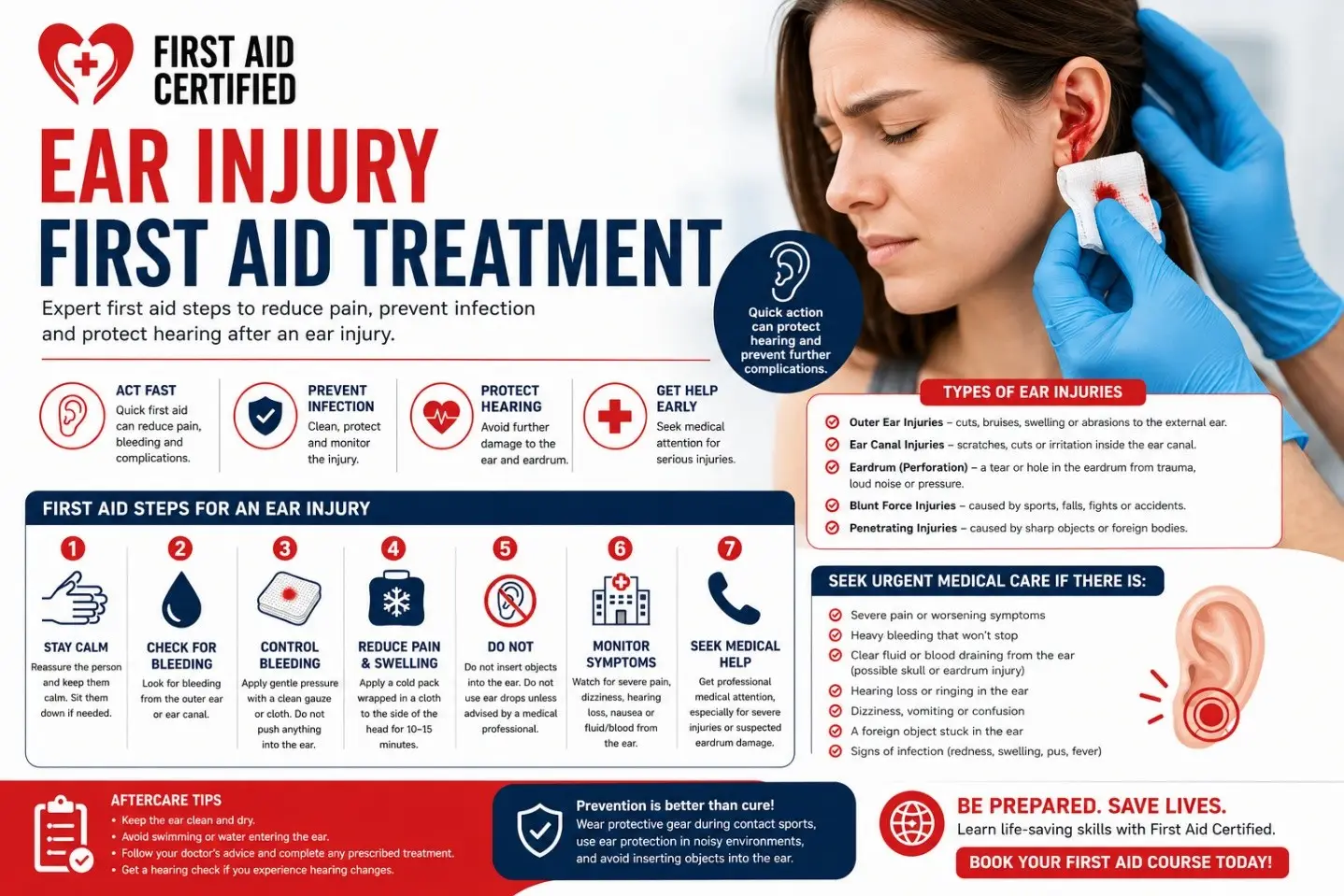
Ear injuries can happen suddenly and unexpectedly in workplaces, schools, sports fields, construction sites, swimming pools, homes, and public environments. While some ear injuries may seem minor at first, others can involve serious complications such as bleeding, hearing loss, concussion, infection, or damage to the eardrum.
Understanding correct ear injury first aid treatment is important for parents, teachers, carers, support workers, coaches, and workplace first aiders.
The ear is a delicate and complex organ responsible for both hearing and balance. Incorrect treatment may worsen the injury or increase the risk of permanent damage.
This guide explains:
- Common types of ear injuries
- Signs and symptoms to watch for
- Correct first aid treatment
- When to seek urgent medical help
- How to reduce complications
- Why first aid training matters
For families, workplaces, schools, and sports organisations in Western Australia, completing First Aid Courses Perth helps build the confidence and practical skills needed to respond calmly during emergencies.
Why Ear Injury First Aid Matters
Ear injuries can affect:
- Hearing
- Balance
- Communication
- Confidence
- Daily activities
- Workplace safety
Quick and appropriate first aid may help:
- Reduce pain
- Prevent infection
- Minimise complications
- Protect hearing
- Support faster treatment
Ignoring ear injuries or using incorrect treatment may increase the risk of long-term damage.
Common Causes of Ear Injuries
Ear injuries can occur in many situations.
Sports Injuries
Contact sports, martial arts, football, basketball, and combat sports may involve blows to the side of the head or ear.
Workplace Injuries
Construction, mining, warehousing, and industrial workplaces may expose workers to:
- Loud noise
- Flying debris
- Falls
- Blunt trauma
- Explosions or pressure injuries
Falls and Accidents
Children and older adults may injure the ear during falls or collisions.
Water-Related Injuries
Swimming, diving, and water sports can lead to:
- Ear infections
- Pressure injuries
- Ruptured eardrums
- Trapped water
Foreign Objects
Children commonly place objects into the ear canal.
Noise Exposure
Sudden loud sounds or prolonged noise exposure may damage hearing.
Types of Ear Injuries
Different injuries require different first aid responses.
Cuts and Bleeding
The outer ear may bleed heavily because of strong blood supply.
Bruising and Swelling
Blunt trauma may cause pain and swelling.
Cauliflower Ear
Common in combat sports and rugby.
This occurs when blood collects under the skin after trauma.
Foreign Objects in the Ear
Objects such as beads, insects, cotton buds, or food may become lodged inside the ear canal.
Ruptured Eardrum
A torn eardrum may occur after trauma, infection, pressure changes, or loud noise.
Hearing Damage
Loud noise exposure can damage delicate structures inside the ear.
Ear Infections
Water exposure or bacteria may lead to infection and inflammation.
Signs and Symptoms of Ear Injuries
Symptoms may vary depending on the injury.
Common Symptoms
- Ear pain
- Bleeding
- Swelling
- Bruising
- Hearing loss
- Ringing in the ears (tinnitus)
- Dizziness
- Fluid discharge
- Feeling of pressure
- Balance problems
Serious Symptoms
Seek urgent medical care if there is:
- Loss of consciousness
- Clear fluid leaking from the ear
- Severe hearing loss
- Persistent dizziness
- Vomiting
- Suspected skull injury
- Severe bleeding
- Facial weakness
These symptoms may indicate serious head or internal ear injury.
First Aid for Minor Ear Cuts and Bleeding
Minor cuts to the outer ear are common.
Step 1: Wash Hands
If possible, wash hands or wear gloves.
Step 2: Apply Gentle Pressure
Use clean gauze or cloth.
Apply gentle pressure to control bleeding.
Step 3: Clean Around the Area
Gently clean surrounding skin if required.
Avoid putting anything deep into the ear canal.
Step 4: Cover the Injury
Use a clean dressing if needed.
Step 5: Monitor for Infection
Watch for:
- Increased redness
- Swelling
- Heat
- Pus
- Fever
Seek medical advice if symptoms worsen.
First Aid for a Blow to the Ear
A direct blow may damage the ear, jaw, or head.
First Aid Steps
- Sit the person down
- Apply a cold pack wrapped in cloth
- Monitor for dizziness or nausea
- Watch for concussion symptoms
- Seek medical review if symptoms worsen
Do not apply ice directly to the skin.
First Aid for a Ruptured Eardrum
A ruptured eardrum may occur after:
- Trauma
- Slaps to the ear
- Diving pressure
- Loud explosions
- Infections
Symptoms May Include
- Sudden pain
- Hearing loss
- Ringing in the ear
- Fluid leakage
- Dizziness
First Aid Treatment
- Keep the ear dry
- Do not insert objects into the ear
- Avoid swimming
- Seek medical assessment
Do not attempt to clean deep inside the ear.
First Aid for Foreign Objects in the Ear
Children commonly place objects into their ears.
Important Safety Rule
Do NOT poke inside the ear with:
- Cotton buds
- Tweezers
- Pens
- Hairpins
- Fingers
This may push the object deeper.
First Aid Steps
- Keep the person calm
- Encourage them not to touch the ear
- Seek medical assistance if the object cannot be removed easily
Insects in the Ear
For insects:
- Tilt the head gently
- Use warm olive oil ONLY if advised and if no suspected eardrum injury exists
- Seek medical care if pain or symptoms continue
Why Cotton Buds Are Dangerous
Many ear injuries are caused by cotton buds.
Cotton buds may:
- Push wax deeper
- Scratch the ear canal
- Cause infection
- Rupture the eardrum
The ear is generally self-cleaning.
Objects should not be inserted into the ear canal.
Ear Injuries and Hearing Loss
Some ear injuries may permanently affect hearing.
Temporary Hearing Loss
May occur from:
- Swelling
- Wax blockage
- Infection
- Pressure changes
Permanent Hearing Damage
May occur after:
- Loud noise exposure
- Explosions
- Severe trauma
- Repeated damage
Early assessment improves outcomes.
Noise-Induced Hearing Injuries
Loud workplaces may expose workers to hearing damage.
High-risk industries include:
- Construction
- Mining
- Manufacturing
- Aviation
- Warehousing
Prevention Includes
- Hearing protection
- Workplace noise control
- Safe work practices
- Regular hearing checks
Hearing damage may develop gradually over time.
Ear Injuries in Sports
Sports-related ear injuries are common.
Common Sporting Causes
- Collisions
- Falls
- Ball impact
- Combat sports
- Water sports
Prevention Strategies
- Protective headgear
- Safe play techniques
- First aid trained staff
- Prompt injury management
Sports clubs benefit greatly from having trained first aiders available.
Ear Injuries in Children
Children are especially vulnerable because they may:
- Insert objects into the ear
- Fall frequently
- Be unable to describe symptoms clearly
Parents, teachers, and childcare workers should monitor:
- Ear pulling
- Crying
- Balance problems
- Discharge
- Hearing difficulties
Early treatment is important.
Ear Injuries After Water Exposure
Swimming and diving may contribute to:
- Swimmer’s ear
- Ear infections
- Pressure injuries
- Trapped water
First Aid Tips
- Dry ears gently
- Tilt head to drain water
- Avoid inserting objects
- Seek medical advice for ongoing pain
Persistent symptoms should be assessed professionally.
Ear Injuries and Concussion
A blow to the ear or side of the head may also involve concussion.
Watch for:
- Headache
- Vomiting
- Dizziness
- Confusion
- Drowsiness
- Balance problems
- Memory issues
If concussion is suspected:
- Remove from activity
- Monitor closely
- Seek medical advice
- Follow concussion guidelines
When to Call 000
Call emergency services immediately if the person has:
- Loss of consciousness
- Severe head injury
- Difficulty breathing
- Heavy bleeding
- Suspected skull fracture
- Seizures
- Unresponsiveness
Always follow DRSABCD principles.
Using DRSABCD for Ear Injuries
Even if the injury appears minor, always assess the whole person.
Danger
Check for hazards.
Response
Check responsiveness.
Send for Help
Call 000 if required.
Airway
Ensure airway is clear.
Breathing
Check breathing.
CPR
Provide CPR if needed.
Defibrillation
Use an AED if available.
Head and ear injuries may occur alongside more serious trauma.
Common Mistakes People Make
Using Cotton Buds
This may worsen injury.
Ignoring Hearing Loss
Hearing changes should not be ignored.
Putting Liquids Into the Ear Without Advice
This may worsen some injuries.
Delaying Medical Assessment
Some ear injuries involve internal damage.
Continuing Sport or Work After Head Trauma
This may increase risk of complications.
Infection Control and Ear Injuries
When providing first aid:
- Wear gloves if available
- Wash hands before and after care
- Avoid direct blood contact
- Dispose of contaminated materials correctly
Good infection control protects both the casualty and responder.
Preventing Ear Injuries
At Work
- Wear hearing protection
- Follow safety procedures
- Use PPE
- Report hazards
During Sports
- Wear protective equipment
- Follow safe playing rules
- Use supervision
At Home
- Keep small objects away from children
- Avoid inserting objects into ears
- Supervise water activities
Prevention is always better than treatment.
Why First Aid Training Matters
Emergencies are stressful.
Without training, many people panic or delay treatment.
Completing First Aid Courses Perth helps participants learn:
- DRSABCD
- Bleeding control
- Injury assessment
- Concussion awareness
- Emergency response skills
- When to seek urgent help
These practical skills improve confidence and preparedness.
Ear Injuries in Care Environments
Support workers, carers, and healthcare staff may encounter ear injuries during:
- Falls
- Mobility incidents
- Aggressive behaviour
- Accidental impacts
- Hearing aid complications
Manual handling and safe workplace practices help reduce injury risk.
Training in HLTWHS005 – Conduct Manual Tasks Safely and First Aid Courses Perth supports safer care environments.
Workplace Responsibilities
Under Australian WHS laws, employers should:
- Provide safe work environments
- Control noise exposure
- Supply PPE
- Provide first aid training
- Maintain emergency procedures
Workers also have responsibilities to follow safety procedures and report hazards.
Frequently Asked Questions
What should I do if someone is bleeding from the ear?
Apply gentle pressure around the area if safe, monitor symptoms, and seek urgent medical assessment, especially after head injury.
Can ear injuries cause hearing loss?
Yes. Some injuries may temporarily or permanently affect hearing.
Should I remove an object from someone’s ear?
Avoid inserting tools or objects into the ear canal. Seek medical assistance if the object cannot be removed safely.
Are cotton buds safe?
Cotton buds may damage the ear canal or eardrum and are a common cause of ear injuries.
Why should workers complete First Aid Courses Perth?
First aid training helps workers respond confidently to injuries, emergencies, falls, bleeding, and workplace incidents.
Conclusion
Ear injuries may range from minor cuts to serious emergencies involving hearing loss, head injury, or ruptured eardrums.
Correct first aid treatment can help reduce complications and improve outcomes.
Key first aid priorities include:
- Keeping the person calm
- Avoiding objects inside the ear
- Managing bleeding safely
- Monitoring for serious symptoms
- Seeking medical care when needed
Whether at work, school, sport, or home, understanding ear injury first aid improves confidence and emergency preparedness.
For families, workplaces, carers, and sports organisations in Western Australia, completing First Aid Courses Perth provides practical skills that help people respond calmly and effectively during emergencies.

